Our language
What we mean by “neurodivergent learner” and “neurodiversity”
Neurodiversity is the idea that there’s no single “right” way for a brain to work. Just as people differ in personality or the way they move through the world, we differ in how we think, learn, focus, process our senses and communicate. These differences are a natural, valuable part of human variation — not flaws to be fixed.
A person whose mind works differently from what society treats as “typical” is neurodivergent. Across early childhood, school, university, TAFE and other learning pathways, this includes autistic students and those with ADHD; specific learning differences such as dyslexia (reading), dyscalculia (maths) and dysgraphia (writing); dyspraxia (developmental coordination disorder); auditory processing disorder and other sensory processing differences; developmental language disorder; tic disorders such as Tourette’s; and twice-exceptional learners who are gifted and neurodivergent — among others. We don’t treat this as a fixed checklist: what matters is how a learner experiences school, not whether they carry a particular label — and we include people whether they’re formally diagnosed, waiting for assessment, or self-identified.
A note on words: one person is neurodivergent; a group of people — like a classroom or a community — is neurodiverse.
When we talk about neurodivergent learners, we mean students right across this spectrum in mainstream education settings across Australia. Our focus isn’t on labels or deficits — it’s on a system that too often isn’t built for how these students actually learn, and on the changes that would let every learner belong and thrive.
Our focus is on experience within mainstream education providers. We really want to hear from learners whose mainstream experience led them to leave it, for home schooling, distance education or other settings, as well as all those connected with supporting these students and their families.
We use identity-first language (“neurodivergent learner”) because it’s the preference of much of the community — while respecting that individuals and families may choose different words for themselves, and following their lead.
Helen’s Way isn’t here to blame individuals or individual providers. We see that education systems are overstretched, and that so many dedicated teachers and learning support teams are doing their very best. We’re with you — we want you better supported, so you feel equipped to support neurodivergent learners the way you want to.
Please join us, and we can raise our voices together.
Why we exist
The education system across Australia is really struggling — even failing — when it comes to supporting neurodivergent learners.
There are parents who have spent years negotiating, appealing, and advocating — and still watching their child struggle in a system that wasn't designed with them in mind. There are neurodivergent learners who can describe in precise detail how school made them feel invisible, incapable, or like a problem to be managed. There are teachers who see the gaps clearly but don't have the training or resources to bridge them. Therapists who watch families fall through the cracks between services. Advocates who have the evidence but need the community.
As a collective voice with so much expertise, we exist to act as a hub for that expertise — gathering it, organising it, and directing it where it can create change.
All of these people hold expertise. Not the kind that comes from a qualification, but the kind that comes from living inside a system, navigating it, fighting it, and trying to fix it — every single day.
Helen's Way was built to bring those people together — not as isolated voices, but as a collective. Because individually, each of these experiences can be seen as an unfortunate exception. Together, they reveal a pattern. And patterns — made visible, organised, and channelled — are what create the conditions for lasting change.
This is not a call for another inquiry or review. Previous inquiries and reviews have already found what we already know. Their recommendations are documented. What Helen's Way offers is something different: a place for the community that lives this reality to come together, share what they know, and advocate collectively for the reforms that have already been called for.
Our mission is for governing systems — the departments, ministers, funding bodies, and school systems with the actual authority to change things — to implement the reforms that have already been called for, and to build the infrastructure that makes those reforms real. That means policy change, yes. But it also means better IT systems built for inclusion, accountability tools that work, complaints pathways with genuine power, and a cultural shift in how neurodivergence is understood across every institution that touches a child's education.
How we work
Three spaces. One community.
Helen's Way is organised around three interconnected spaces — each with a different focus, all working toward the same goal: a better future for neurodivergent learners. You can contribute to one, or all three.
Space 01
The TrackerAdd your numbers to the tracker — the quantitative data showing the scale and reach of a system that needs reform. Together, these data points make the case for reform impossible to ignore.
Go to The Tracker →Space 02
Innovative Solutions + IdeationA collaborative space for generating, sharing, and developing ideas that could improve outcomes for neurodivergent learners — from classroom strategies to systemic redesign. No idea is too big.
Explore this space →Space 03
Reform AgendaThe case for reform has already been made. This space is where the community comes together to understand the reform priorities and build the collective voice that drives change.
See the agenda →Why the name
How does Helen Keller's story relate to ours?
When most people think of Helen Keller, they think of an extraordinary individual who overcame extraordinary obstacles. Deaf and blind from infancy, she went on to become an author, activist, and the first deaf-blind person to earn a Bachelor of Arts degree. It's a remarkable story.
We want to be clear about something upfront: we know that deafness and blindness are not the same as the challenges neurodivergent learners face. We are not drawing a direct comparison between Helen Keller's experience and theirs, and we would not want to. What inspires us is something different — and something simpler. It is the story of the people around her. They saw potential where others saw only difficulty. They committed to understanding her, to building the tools she needed, to finding a way in. They refused to accept the world's verdict on what she was capable of. And then she flew. That is the model we are following.
But here's what that story often leaves out: Helen Keller didn't do it alone — and her success wasn't inevitable.
As a young child, before anyone found a way to reach her, Helen's behaviour was described by those around her as unmanageable. She couldn't communicate. She couldn't be understood. Relatives urged her parents to have her institutionalised — one uncle reportedly called her "defective and not very pleasant to see." Her parents refused. But it is worth sitting with how close she came to a completely different life: one defined not by her potential, but by a system's failure to find a way to reach her.
What changed for Helen wasn't Helen herself — it was access to people and systems that helped her understand, and to be understood. When Anne Sullivan arrived in 1887 and developed a tactile finger-spelling method to communicate with her, the transformation was almost immediate. Helen later described the moment she understood that every object had a name — felt through her hand — as the point at which the world opened up. The behaviours that had been labelled as problems were not defects of character. They were the entirely predictable result of a person who could not make herself understood.
A system built by someone who understood difference.
The communication system that gave Helen Keller access to the written world wasn't discovered by Helen — it was built decades earlier by someone who had lived the same experience. Louis Braille lost his sight as a child in an accident in 1812, at the age of three. As a student at the National Institute for Blind Youth in Paris, he developed a tactile writing system in the 1820s — not because he was asked to, but because he understood from the inside what was missing. Braille's system gave blind people independence: the ability to read and write without sighted assistance.
By the time Helen Keller came of reading age, the situation for people who were blind was marked by competing tactile writing systems — a period some called the "War of the Dots." Helen, who had to master several of these systems for her university studies, called the situation "absurd." She became one of the most influential voices in the campaign to standardise braille as the official writing system for blind people in the United States — a campaign that succeeded in 1918.
"Louis Braille built his system because he understood from the inside what was missing. Anne Sullivan reached a child the world had written off. Neither of them was 'exceptional' in the true meaning of the word — but they were committed, and they believed something better was possible. That's the model we are following."— Helen's Way brand story
This is the parallel we're drawing. The neurodivergent learners our community advocates for are not problems to be solved. They are not extraordinary exceptions to be celebrated while the system remains unchanged. They are learners — with different needs, different ways of thinking, and equal entitlement to an education that meets them where they are.
What they need are systems that work for them and for those supporting them. Building that system requires exactly what made Helen Keller's story possible: access, belief, and the sustained commitment of a community of people who refuse to accept a lesser outcome. And we are here to help build that system.
The name is a reminder, not a monument.
We didn't name this space after Helen Keller to make her an icon. We named it after her to remind ourselves — and the system — that the story of every neurodivergent learner — and the stories of the community supporting them — could look different, if the systems they need are available and adequately resourced. Helen's name in our platform is a provocation: what would change if every child had what Helen had?
Our values
What we stand for.
-
Lived experience is expertise We don't treat shared lived experience as anecdotal evidence to be set aside once the "real" experts arrive. In this community, it is the primary source of knowledge, and it shapes everything we do.
-
Everyone at the table Real change happens when parents, learners, educators, therapists, and policymakers are in the same room — each bringing their piece of the puzzle, and each listening to the others.
-
Shared experiences to inform change We believe in sharing our experiences so we can see where issues are truly systemic. We are not interested in blaming individuals — so we ask that no names of people or education place names are included when sharing experiences here.
-
Innovation from within The best ideas for fixing education often come from the people who have lived through its failures. We believe community-led innovation is not a secondary option — it's the most reliable path to change that actually works.
-
Reform with evidence Our reform agenda is built on the experiences of real people — and we're committed to turning that evidence into policy change that is specific, measurable, and hard to ignore.
-
Research in partnership with community We welcome researchers who approach community evidence with respect and rigor — whose work validates what families and learners know, rather than replacing their voice with academic interpretation.
-
Accessibility always This platform is designed to be accessible to everyone, including neurodivergent visitors. We apply Universal Design for Learning (UDL) principles to everything we build and write.
Who created this
A community started by someone who needed one.
Helen's Way was created by a parent advocate for her neurodivergent kids across public, Catholic, independent, distance education, and home-schooling — someone who has navigated every corner of the Australian education system, and who brought to that experience both lived expertise and professional experience in education delivery management and marketing across multiple sectors, including direct advocacy engagement with Members of Parliament.
The platform grew out of a recognition that the knowledge held by families, learners, educators, and Medical & Allied Health professionals is fragmented, undervalued, and rarely reaches the people with the power to act on it. Helen's Way is an attempt to change that — not by speaking for those communities, but by building a space where they can speak for themselves.
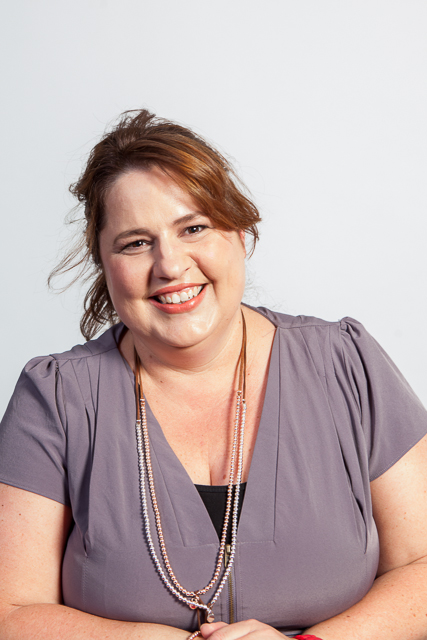
Katie Toomey
Parent · Advocate · Education Manager · Marketing & Campaign ManagerKatie has advocated for her neurodivergent children across public, Catholic, independent, distance education, and home-schooling settings — giving her a ground-level understanding of the system from multiple angles. She brings professional experience in managing education delivery and in marketing across multiple sectors, alongside direct advocacy engagement at MP level. She is also a member of the Neurodivergent Supports in Schools Working Group, run by Independent NSW MP Michael Regan (Member for Wakehurst). Helen's Way is a volunteer project.
